We use cookies for certain features and to improve your experience. See our Cookie Policy and Privacy Policy to learn more

Leafly

Shop legal, local weed.

Open
advertise on Leafly
ShopDeliveryStoresDealsStrainsBrandsProductsLeafly PicksDoctorsCannabis 101Social impact
  • Sign in
  • Create account
  • Strains
  • Shop
  • Shop
  • Delivery
  • Deals
  • Stores
  • Brands
  • Products
  • Leafly Picks
  • Learn
  • Cannabis 101
  • News
  • Leafly Learn
  • Science of cannabis
  • Doctors
  • Social impact
  • Lab partners
  • Download the Leafly App
  • Advertise on Leafly
    • Leafly.comUSA flag
    • Leafly.caCanadian flag
  • Help
  1. Home
  2. News
  3. Politics
  4. U.S. Attorney General Says Cannabis Is Not a Gateway Drug
  • News
  • Lifestyle
  • Strains & products
  • Industry
  • Growing
  • Health
  • Science & tech
  • Leafly USA
  • Podcasts
  • Learn
Politics

U.S. Attorney General Says Cannabis Is Not a Gateway Drug

Gage PeakeLast updated July 28, 2020
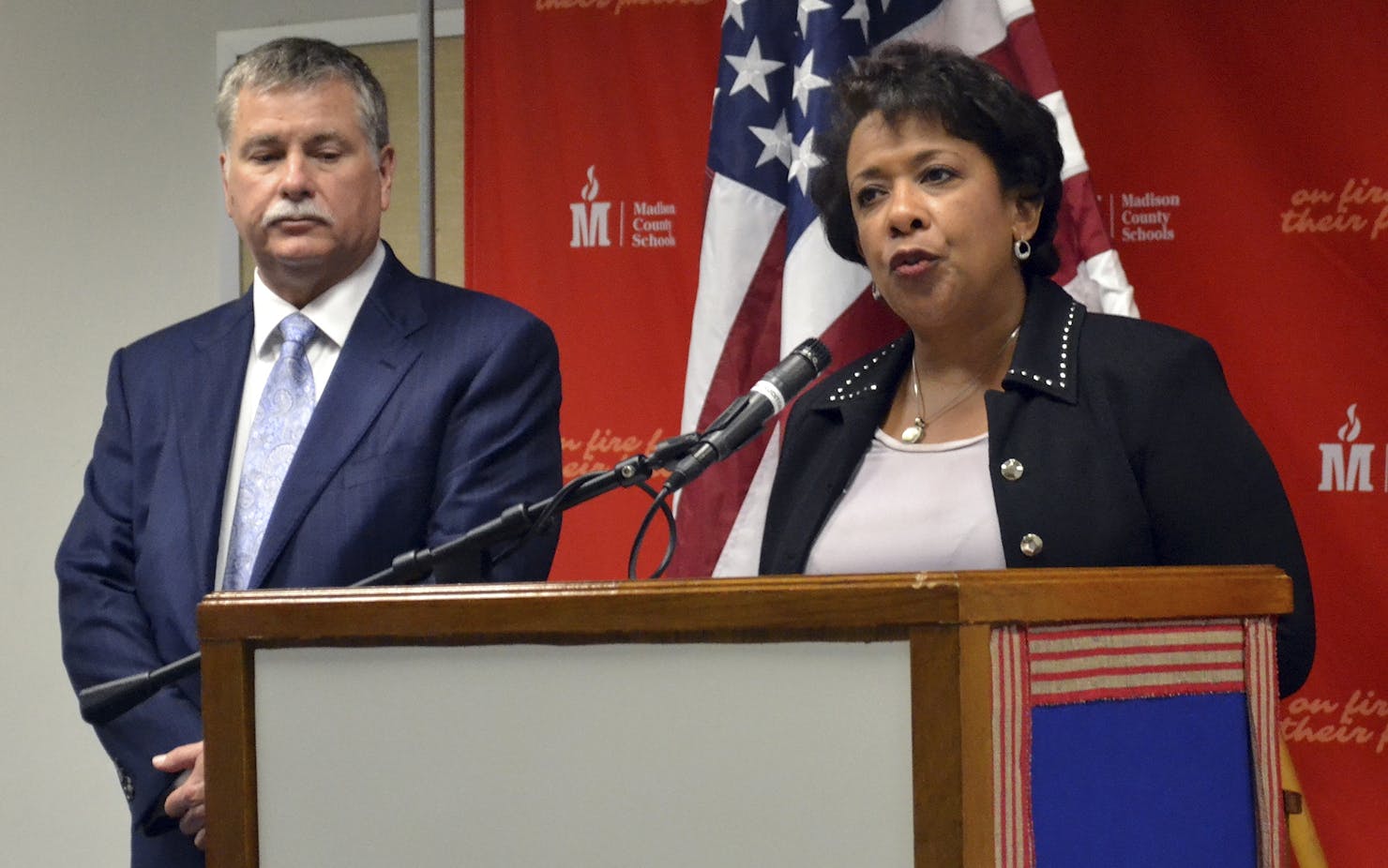
U.S. Attorney General Loretta Lynch, right, speaks at Madison Central High School in Richmond, Ky., Tuesday, Sept. 20, 2016. Listening at left is Kerry Harvey, a U.S. Attorney in Kentucky. Lynch was in Kentucky to raise awareness of prescription drug and heroin abuse as part of an Obama administration effort. (AP Photo/Dylan Lovan)

On Tuesday, U.S. Attorney General Loretta Lynch acknowledged that the consumption of cannabis does not lead a person to use harder drugs. Lynch’s public statement may be the clearest repudiation yet of the mythical “gateway theory” originally fabricated by drug czar Harry Anslinger in the 1950s.

Lynch made the statement during a town hall meeting in Richmond, Ky., where she discussed the dangers of opioid abuse with a group of high-school teens. In the course of that discussion, talk soon turned to the question of cannabis. Tyler Crafton, a student at Madison Central High School, asked Lynch whether she thought that recreational use of cannabis among high school kids would lead to opioid abuse.

“It’s not as though we are seeing that marijuana is a specific gateway,” Lynch said.

“There a lot of discussion about marijuana these days,” Lynch responded. “Some states are making it legal, people are looking into medical uses for it, and I understand that it still is as common as almost anything. When we talk about heroin addiction, we usually, as we have mentioned, are talking about individuals that started out with a prescription drug problem, and then because they need more and more, they turn to heroin. It isn’t so much that marijuana is the step right before using prescription drugs or opioids.”

“If you tend to experiment with a lot of things in life,” Lynch added, “you may be more inclined to experiment with drugs.”

If that additional statement strikes you as backtracking—well, it sounds like that to me, too. But then Lynch followed up with what could be one of the most important quotes about cannabis this election season.

“It’s not as though we are seeing that marijuana is a specific gateway,” she said.

That comment is consistent with the National Institute on Drug Abuse, which notes that the majority of people who use cannabis do not go on to use other, harder substances. When Lynch talked about opiates with the high school students, she said that opioid painkillers could actually be the gateway drug.

The mythical “gateway theory” was originally fabricated by federal Bureau of Narcotics Commissioner Harry Anslinger. In the 1930s, Anslinger specifically rejected the notion that cannabis lured consumers on to stronger drugs. “The marijuana addict does not go in that direction,” he told Congress. A decade later, Anslinger reversed himself and established the gateway theory as a way to prop up the marijuana threat. Most young heroin addicts, he testified, “took to the needle when the thrill of marihuana was gone.” (If you want to know more, check out Martin A. Lee’s definitive history, Smoke Signals.)

The gateway theory has been debunked by countless government studies. Take your pick: the 1944 LaGuardia Commission report; the 1972 Shafer Commission report; the 1999 Institute of Medicine report. As researchers with the federal Institute of Medicine reported: “There is no conclusive evidence that the drug effects of marijuana are causally linked to the subsequent abuse of other illicit drugs.”

Lynch’s statement itself wasn’t shocking. We’ve known since the 1940s that the gateway theory is a fairy tale. What’s surprising is that it took this long for a sitting U.S. attorney general to acknowledge that very basic and proven fact.

Related Stories

Shop highly rated stores near you

Showing you stores near
See all stores
  • Loading...
    Loading...Loading...
    Loading...
    Loading...Loading...
    Loading...Loading...
  • Loading...
    Loading...Loading...
    Loading...
    Loading...Loading...
    Loading...Loading...
  • Loading...
    Loading...Loading...
    Loading...
    Loading...Loading...
    Loading...Loading...
  • Loading...
    Loading...Loading...
    Loading...
    Loading...Loading...
    Loading...Loading...
  • See all stores
See all stores
gateway-druglaw enforcementpolitics
Gage Peake
Gage Peake
Gage Peake is a former staff writer for Leafly, where he specialized in data journalism, sports, and breaking news coverage. He's a graduate of the University of Nebraska-Lincoln's College of Journalism and Mass Communications.
View Gage Peake's articles

The latest in Politics

  • Cannabis rescheduling just sped up: What you need to know about the executive order image
    Cannabis rescheduling just sped up: What you need to know about the executive order
    Morgan Rosendale
  • How US import tariffs are impacting cannabis prices and products image
    How US import tariffs are impacting cannabis prices and products
    Leafly Staff
  • Ohioans must activate to defend cannabis freedoms from lawmakers image
    Ohioans must activate to defend cannabis freedoms from lawmakers
    David Downs
  • Montanans must activate to protect legalization in 2025 image
    Montanans must activate to protect legalization in 2025
    David Downs
Get good reads, local deals, and strain spotlights delivered right to your inbox.

By providing us with your email address, you agree to Leafly's Terms of Service and Privacy Policy.


Stay In Touch

Receive updates on new products, special offers, and industry news.

Something went wrong, please try again.

By providing us with your email address, you agree to Leafly’s Terms of Service and Privacy Policy.

Leafly mobile app
Get high for less.
Download the Leafly app.
Download Leafly: Marijuana Reviews on the App StoreDownload Leafly Marijuana Reviews on Google Play

Business Solutions
  • List your store
  • List your brand
  • Lab partners

About Leafly
  • About us
  • Careers
  • Newsroom
  • Investor relations
  • Contact us
  • FAQs
  • Accessibility

Stores in
  • British Columbia
  • Ontario
  • Alberta
  • Saskatchewan
  • Manitoba
  • Prince Edward Island

Privacy & Terms
  • Terms of use
  • Commercial terms of use
  • Privacy policy
  • Do not sell my personal information

The material provided on Leafly is intended for educational and informational purposes only. Leafly is not engaged in rendering medical service or advice and the information provided is not a substitute for a professional medical opinion. If you have a medical problem, please contact a qualified health professional.


© 2025 Leafly, LLC
Leafly and the Leafly logo are registered trademarks of Leafly, LLC. All Rights Reserved.