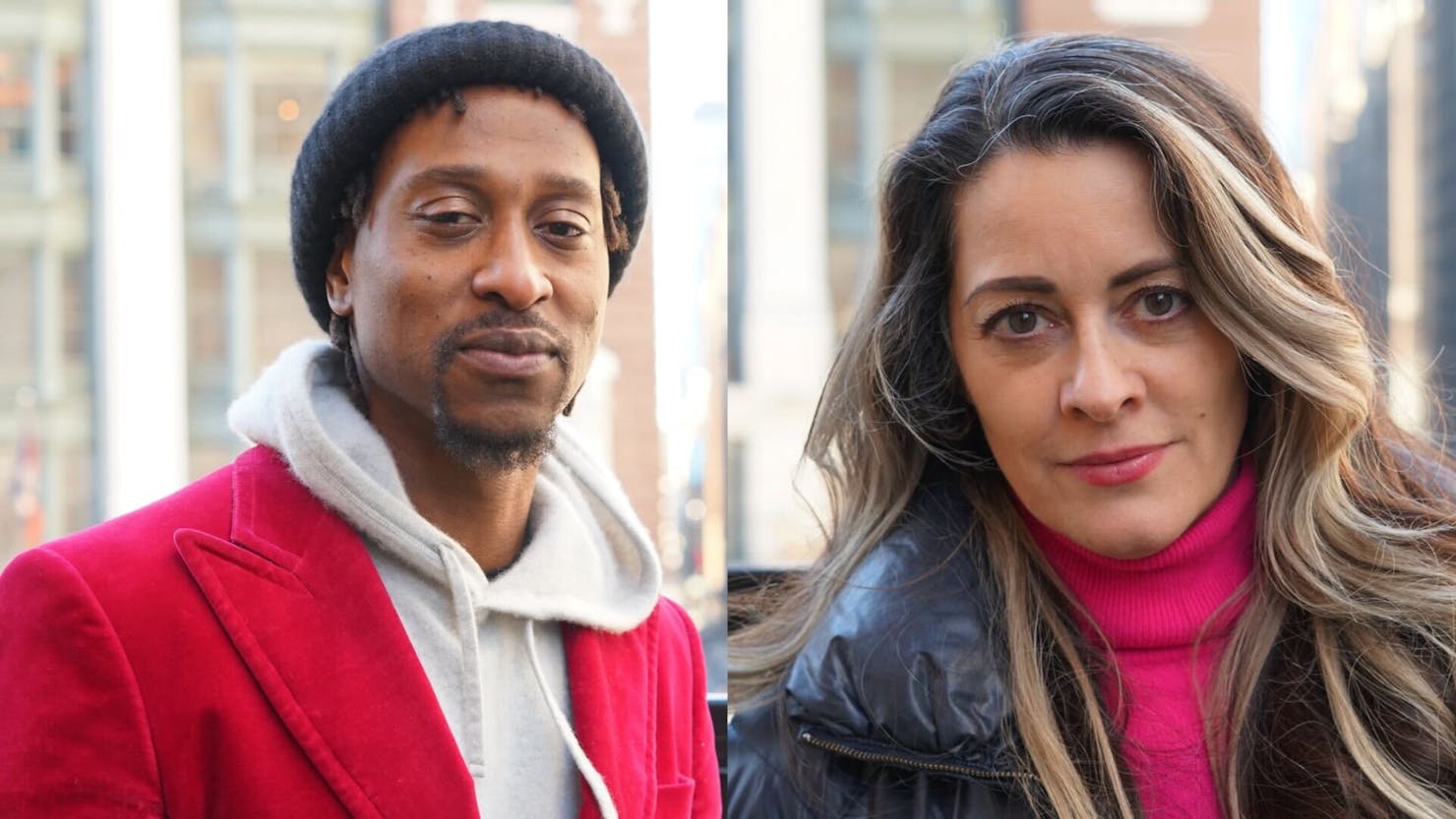
Meet the dispensary owners that New York state officials called ‘the cream of the crop’ after reviewing over 900 license applicants. They’re currently fighting local politics for the right to open their doors.
After 20 months of delays, Brown Budda New York is finally open for business in Southampton, New York. They currently offer delivery (click here to order on Leafly). But they haven’t opened their retail store just yet. In a new lawsuit, the owners claim that local officials are blocking them from opening, costing them millions and depriving The Hamptons of access to legal cannabis.
What is Brown Budda New York?

Brown Budda New York is The Hamptons’ first licensed adult-use cannabis retailer. The store is owned by Marquis Hayes and Kim Stetz, and located near some of the most expensive zip codes in the United States. The team has been preparing to open for over two years, but recently filed a lawsuit claiming The Long Island town officials used local zoning laws to stop Brown Budda’s storefront from approval.
“Every other licensed store is making $1.6 million a month,” Brown Budda New York lawyer Chris Killoran told the New York Post after the lawsuit was filed in late August. “Ours is making zero because Southampton won’t let us open,” Killoran added.
Brown Budda’s suit claims that Southampton officials “created a bureaucratic maze of special use permits, site-plan reviews and costly add-on requirements with the intent of stopping the dispensary in its tracks,” according to the NY Post
How much has delayed opening cost Brown Budda’s owners?
According to the NY Post report, Brown Budda has lost millions because of the delays. Investors have backed out. Rent and expenses have been paid in vain. And over $60,000 of inventory has expired. Not to mention the roughly $20 million in revenue they’ve missed out on, according to state-reported averages.
The New York Post report: “Since being cuffed by the town’s officials, the business has burned through more than $443,000 in rent, $160,000 in overhead and $130,000 in legal and engineering fees as it tries to meet the town’s constantly changing demands… The shop has also lost out on a $1.2 million investment after Southampton claimed they still needed zoning approvals, according to the lawsuit… (Also), roughly $60,000 worth of cannabis inventory has expired… And its owners continue to pay about $8,000 a month in building and administrative costs with nothing to show for it.”
The lawsuit claims that the blockage is being influenced by town officials who have expressed resistance to New York’s legal dispensary program. In 2021, the town of Southampton did not vote to block dispensaries before the deadline. So Brown Budda’s lawsuit claims that local officials ‘moved the goalposts’ to stop their store from opening.
Shop highly rated stores near you
Showing you stores nearFor a justice-involved, minority-owned business, these delays mean losing the “first-to-market” opportunity MRTA promised to communities harmed by prohibition. Currently, Southampton remains the only town in New York with zero “locally” approved cannabis operators. If the state is serious about enforcing its own cannabis laws, why is OCM standing aside while local politics undermine legalization?
Chris Killorian, lawyer for Brown Budda New York
Killorian said during a town board meeting last year, local Chairwoman Jacqui Lofaro asked if the town could cap the amount of weed stores allowed in its borders by negotiating with the state.
Marquis Hayes

Hayes is the New York City glue of Brown Budda New York. A born and bred Bronx native, Hayes recalls his first experience with cannabis at his grandmother’s apartment, smelling it wafting in the air while playing with Cheeba, the resident pitbull. Hayes’ childhood coincided with the War on Drugs and crack epidemic of the 1980s; Hayes himself also cooked and sold crack as a teen and young adult, but never used it. Instead, he funneled his profits into community causes, and tells Leafly that cannabis was his small salve for generational, traumatic wounds.
“I grew up [with a] typical childhood in this dysfunctional household, at times. There was no prescription for PTSD; you get reprimanded and there’s no therapy. I probably started smoking weed at the age of 13. Marijuana was cool to smoke because the people that were hip and cool were smoking. Growing up, [I wanted] to try these New York strains. I’m spiritual when [marijuana’s] in my diet.”
Marquis Hayes, co-owner of Brown Budda New York
Later, when Hayes was incarcerated, food became that salve. “Imprisonment forced me to focus on food. You know I was the chef in the hood, I’ve been in the kitchen my whole life. It’s just the cuisine has changed,” he said.
When he was released in 2007, Hayes entered the culinary world, eventually founding the Brown Butter New York catering business and working at restaurants like Vai and Stanton Social. His life and business partner, Stetz, told him about the dispensary application in mid-2022, and the rest is history.
Brown Budda New York’s fight with Southampton comes down to a simple principle: if state law says what is allowed, towns cannot pile on extra rules to block cannabis businesses. MRTA never gave towns the power to veto licensed operations, especially delivery services. Yet Southampton has done just that. Despite OCM’s approval, the town imposed a “special use” permit scheme that has stalled Brown Budda, even though the same site was previously approved for a pool contractor with tougher environmental regulations. At one hearing, the Southampton Planning Board chair flatly said, “We live here. The State does not live here.” (YouTube clip). The conflict is sharper because Brown Budda’s license was issued in November 2022, before Southampton passed its rules in 2023. Those rights are grandfathered, raising the question: how can a license granted by the state be subject to rules written after the fact? Meanwhile, since early 2023, Brown Budda has repeatedly asked OCM, and more recently the New York Attorney General, to issue clear guidance confirming that local governments cannot make state licensed cannabis operations “unreasonably impracticable.” Those requests have gone unanswered.
Chris Killorian, lawyer for Brown Budda New York
Kim Stetz

While Hayes was hustling in the Bronx, Kim Stetz was having her own lightbulb moment with cannabis in upstate New York. Her friend’s older sister was growing it (and still does), so Stetz took a hit. Soon, she was carving apple pipes and rolling up joints in strips of paper, hiding in one of her neighborhood’s treehouses.
From there, cannabis would inform Stetz’s career as a yoga teacher, meditation leader, and psychotherapist. Stetz has lived in every borough of the city, and the need for safe, accessible and equitable cannabis is everywhere.
“My career has been making my own jobs that never exist,” she says with a laugh. “I’ve been watching plant medicine evolve for [the] last 10 years… and in that vein, [a] harm reduction approach is supremely important. My degree in psychotherapy comes through the Social Work line, which means that you are mainly interested in people in the environment and how lives evolve, how communities are part of their strengths and barriers to everything. It’s all about holding space for people.”
A friend of Stetz, who owns a farm upstate, told them about the dispensary window, and she says they pulled the application together in two weeks.
Stetz and Hayes are life partners and business partners, and they both believe in creating opportunities for one’s self. Before Brown Budda New York, they were running Recipe for Humanity, a nonprofit to address food deserts and build financial infrastructure for marginalized communities through hospitality. It took them as far as Vancouver, British Columbia, working with Indigenous communities.